Serving Aurora, Denver Metro & Colorado | 15+ Years of DUI Defense

Colorado has changed its ignition interlock laws for many first-time DUI drivers. House Bill 26-1242 was signed into law on May 28, 2026, but its most important provisions do not take effect until June 1, 2027. The new law will require certain first-time offenders to hold an ignition-interlock-restricted driver’s license for nine consecutive months after their driving privileges are reinstated.
The law applies to qualifying license revocations occurring on or after June 1, 2027. Anyone facing a Colorado DUI should understand the new rules because the date of the revocation—not merely the arrest—may affect how the law applies.
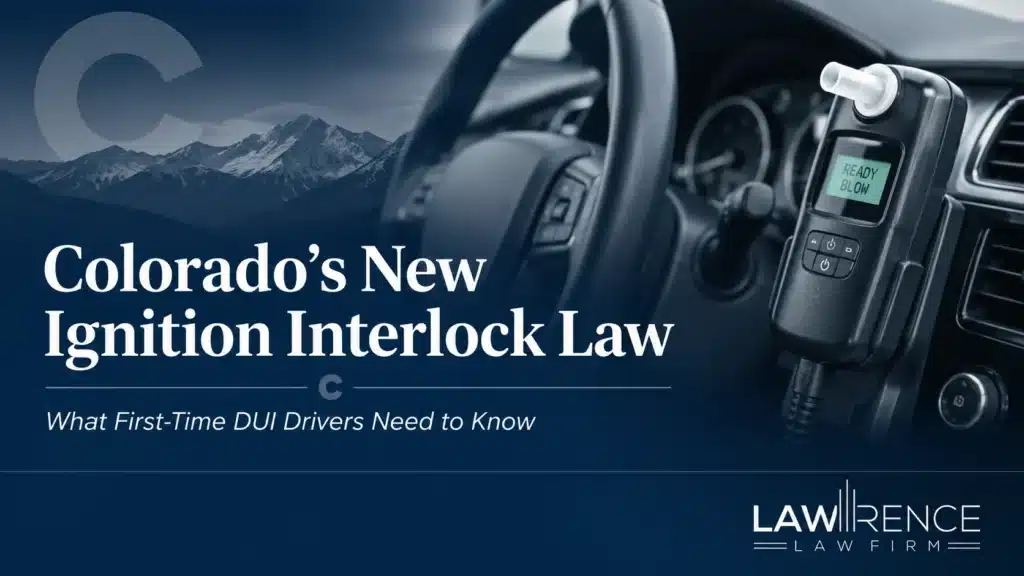
What Is an Ignition Interlock Device?
An ignition interlock device is connected to a vehicle’s ignition system. The driver must provide a breath sample before the vehicle starts and may have to provide additional samples while driving. The device can prevent operation when it detects alcohol above the permitted level.
A person with an interlock-restricted license generally may drive only an equipped vehicle. The provider reports possible alcohol readings, missed service appointments, tampering, and attempts to bypass the device to the Colorado Department of Revenue.
Interlock is separate from probation, alcohol classes, community service, fines, and other consequences imposed in the criminal case. A driver may therefore satisfy the court’s sentence but still have unresolved DMV requirements. The DMV proceeding can affect driving privileges even when the criminal charge is dismissed.
What Changes Under the New Law?
Beginning June 1, 2027, a person whose license is revoked for a first DUI conviction, DUI per se conviction, or administrative finding of driving with a blood alcohol content of at least .08 must generally maintain an interlock-restricted license for nine consecutive months after reinstatement. The driver cannot obtain an unrestricted license until that period is completed unless the driver qualifies for early removal.
Under the current system, many first-time drivers with a BAC below .15 may seek early reinstatement and use interlock while the original nine-month revocation continues to run. A driver who does not seek early reinstatement may instead wait through the revocation period before attempting to restore full driving privileges.
The new statute makes interlock a post-reinstatement requirement for covered first-time revocations. Simply waiting without driving may no longer allow a qualifying driver to avoid interlock. After reinstatement, the person must ordinarily complete the interlock period before receiving an unrestricted license.
The new mandatory provision is written specifically for first revocations involving DUI, DUI per se, or excess BAC of .08. A reduction to DWAI may affect the criminal case and points assessed, but it does not necessarily undo a separate administrative revocation. The court case and DMV case must be analyzed separately.
Does the Law Apply to a First DUI With a BAC of .15 or Higher?
A BAC of .15 or higher presents a different problem. Colorado generally designates a driver as a Persistent Drunk Driver when a chemical test is .15 or higher. That designation can require a two-year ignition interlock period, along with Level II alcohol education and treatment.
House Bill 26-1242 creates a nine-month rule for covered first-time revocations, but it does not eliminate longer requirements that apply because of a high BAC, a refusal, prior alcohol-related history, or another basis for a Persistent Drunk Driver designation. A driver should not assume that “first offense” automatically means only nine months of interlock.
Can a First-Time Driver Remove Interlock Early?
Colorado law currently allows qualifying first-time offenders to seek early removal after four consecutive monthly reporting periods without specified problems. The reports must show no disqualifying alcohol-related interruption, tampering, circumvention, or basis for extending the restriction.
House Bill 26-1242 preserves the possibility of early removal. The Department of Revenue must determine that the driver satisfies the requirements. A driver should continue using and servicing the device until the DMV confirms that the restriction has been removed.
A failed test does not necessarily mean that the driver committed a new DUI. However, reported alcohol readings can prevent early removal and may eventually result in additional interlock time. Colorado law (C.R.S. 42-2-132.5) permits the DMV to extend the restriction when the device prevents normal operation because of excessive breath alcohol during three of any 12 consecutive reporting periods.
What Changes for Drivers Who Refused Testing?
Colorado’s Express Consent law imposes serious license consequences when a driver refuses a required breath or blood test after a DUI arrest. Under current rules, an adult driver whose license is revoked for refusal generally must serve two months before applying for early reinstatement with interlock.
Beginning June 1, 2027, House Bill 26-1242 removes that two-month waiting period.
That does not make refusal consequences minor. A refusal can still result in a one-year revocation for a first refusal, a Persistent Drunk Driver designation, and a two-year interlock requirement. The new law removes the waiting period; it does not erase the refusal or reduce the standard two-year interlock consequence.
Drivers who were under 21 at the time of the offense remain subject to different restrictions. The statute continues to provide that a person under 21 may not seek early reinstatement until the license has been revoked for one year.
Financial Assistance Will Also Change
Drivers may face installation charges, monthly lease and calibration costs, removal fees, and additional charges for missed appointments or lockouts.
The new law revises Colorado’s financial-assistance program. A person may qualify by showing enrollment in a public-assistance program, income at or below 150 percent of the federal poverty level, or other circumstances showing that available discretionary income makes the device impractical to afford.
For eligible participants, a certified manufacturer must provide free standard installation, free removal after successful completion, and a discount of up to 50 percent on the monthly lease rate. For a vehicle classified as high-end or electric, the program covers 50 percent of the installation fee rather than the full amount.
The assistance does not cover fees arising from violations, noncompliance, missed appointments, lockouts, or other administrative charges. A participant who fails to remain compliant may lose affordability status and become responsible for the full cost unless eligibility is restored.
Interlock manufacturers will also be required to provide written information about financial assistance when an installation appointment is scheduled and when the driver signs the lease or service agreement. The DMV must make eligibility and application information available on its website.
What Should a Driver Do After a First DUI Arrest?
Do not assume the court case and driver’s-license case are the same proceeding. A person may have only seven days to request a DMV hearing, depending on whether the case involves a breath test, blood-test result, or refusal. Missing that deadline can allow the revocation to take effect without a contested hearing.
A driver should also obtain a complete driving record. Prior alcohol-related incidents may change the revocation or interlock requirement. The result may also depend on the BAC, whether testing was refused, the driver’s age, and whether another restraint is already in effect.
Before installing a device, confirm that the provider is approved by Colorado and ask about every charge in the lease agreement. Drivers seeking financial assistance should request application information before installation. Once interlock is installed, timely service and strict compliance are essential. Driving a vehicle without the required device or attempting to bypass it can create new criminal and licensing consequences.
Talk With a Colorado DUI Attorney
The new law will make ignition interlock mandatory after reinstatement for many first-time DUI drivers whose revocations occur on or after June 1, 2027. The exact result depends on the revocation, BAC, testing decisions, prior history, age, and both proceedings.
A Colorado DUI attorney can evaluate whether the revocation can be challenged, explain the reinstatement requirements, and identify how a plea agreement may affect the criminal case without necessarily resolving the DMV case.
The Lawrence Law Firm represents people charged with DUI and DWAI throughout the Denver metropolitan area. We offer free consultations to discuss the criminal charge, the DMV process, and the steps needed to protect your driving privileges.