Aurora is one of Colorado’s fastest-growing cities — and that means more cars on the road, heavier commute traffic, and unfortunately, more serious crashes at busy junctions throughout the city. While collisions can happen anywhere, some intersections continue to show higher rates of crashes and injuries year after year.
For drivers and passengers in Aurora, understanding where these dangerous spots are and what contributes to the risk can help improve safety. For those injured in a crash, knowing how and why collisions happen also plays a key role in establishing fault and pursuing compensation.
At the Lawrence Law Firm, our Aurora car accident attorneys regularly handle cases arising from collisions at these very intersections, helping clients navigate the claims process and recover for their injuries.
Why Certain Intersections in Aurora Are More Dangerous
There are several common reasons why some intersections in Aurora see more crashes:
-
High traffic volume and commuter flow
-
Complicated light timing or lane configurations
-
Driver distraction and red-light running
-
Inadequate left-turn signals or lack of protected turn lanes
-
Speeding and merging behavior during rush hours
According to traffic safety data from the Colorado Department of Transportation (CDOT), intersections with heavy commuter traffic and short signal cycles tend to have higher crash rates.
Top 7 Most Dangerous Intersections in Aurora (2025)
Below are some of the most crash-prone intersections in Aurora based on local traffic injury reports, crash data trends, and common personal injury claims we see at our firm.
1. Chambers Road & East Iliff Avenue
This intersection has long been a hotspot for collisions due to multiple lanes of high-speed traffic, heavy turning movements, and frequent congestion.
Risks:
Multiple lanes with complex turns
Fast-moving traffic during peak hours
Drivers running yellow and red lights
Common Crashes:
Rear-end and side-impact (T-bone) accidents
Learn how our Colorado car accident attorney helps clients injured in serious collisions.
2. East Alameda Parkway & South Sable Boulevard
Near the Aurora Mall and major retail corridors, this intersection combines heavy vehicle traffic with high pedestrian activity — a recipe for crashes.
Risks:
Congested shopping traffic
Frequent stopping and starting
Pedestrians and cyclists crossing
Common Crashes:
Pedestrian collisions, rear-end crashes
External Resource:
For Denver metro traffic trends, see CDOT’s crash data dashboard.
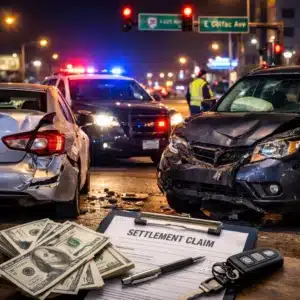
3. East Colfax Avenue & Chambers Road
Colfax Avenue is an extremely busy east-west arterial — one of the most traveled roads in the metro area — intersecting with Chambers at a location prone to high-speed collisions.
Risks:
Common Crashes:
Multi-vehicle pileups, high-speed impacts
Our blog “Comparative Fault in Colorado Car Accident Cases” provides some insight into how competing causes impacts liability.
4. South Buckley Road & East Iliff Avenue
With significant traffic flowing in all directions — especially during school and work commute times — this is another dangerous location.
Risks:
Common Crashes:
Side-impact and rear-end collisions
5. Peoria Street & East 6th Avenue
This junction carries both commuter and commercial traffic and sees frequent crashes due to lane changes and speed differences.
Risks:
Common Crashes:
Side-impacts and head-on collisions
6. Tower Road & East Smoky Hill Road
Rapid residential growth in southeast Aurora has increased traffic at this intersection, often overwhelming the signal timing and lane capacity.
Risks:
Common Crashes:
Rear-end and side-sweeps
7. I-225 On & Off Ramps (Especially at Iliff and Alameda)
While not traditional intersections, these interchange areas function as merge zones where traffic speeds change dramatically.
Risks:
Common Crashes:
Multi-vehicle pileups, merging collisions
Types of Accidents at Dangerous Intersections
Intersections don’t just produce one kind of crash — the configuration and driver behavior influence the collision type:
Rear-end collisions (common at stop lights)
T-bone (side-impact) crashes
Left-turn collisions
Pedestrian and bicycle collisions
Multi-vehicle chain reactions
Each type can lead to severe injuries requiring immediate medical care.
Who Is at Fault After an Intersection Crash in Colorado?
Colorado follows a modified comparative fault rule, meaning a victim can still recover damages as long as they are less than 50% at fault. This is important in intersection cases where liability is often contested.
What To Do If You’re Injured at a Dangerous Intersection
f you’re involved in a crash at one of these intersections, taking the right steps can help protect your health and your legal rights:
1. Call 911 and Report the Crash
An official police report becomes key evidence later.
2. Seek Medical Treatment
Even if you feel fine, symptoms of traumatic injury can be delayed.
3. Document the Scene
Photos of vehicle damage, skid marks, traffic signals, and road signage can matter later.
4. Collect Witness Info
Eyewitnesses help corroborate your version of events.
5. Contact a Lawyer Before Talking to Insurers
Insurers often try to downplay damages. Speaking with a knowledgeable Aurora car accident attorney early protects your claim.
Damages You May Recover After an Intersection Crash
Victims of serious collisions may be entitled to a range of damages, including:
Medical bills and future care
Lost wages and loss of earning capacity
Pain and suffering and emotional distress
Property damage
Loss of enjoyment of life
For a deeper dive into what damages may be available in a Colorado crash claim, check out our blog on types of damages in a Colorado car accident settlement.
How an Aurora Car Accident Attorney Helps
At the Lawrence Law Firm, we handle the legal side so you can focus on healing. Our attorneys:
Investigate the crash and gather evidence
Consult with reconstruction experts if needed
Negotiate with insurance companies
Build a strong demand for full compensation
File a lawsuit when insurers refuse fair offers
We serve clients throughout Aurora, Arapahoe County, and the Denver metro area in serious car accident cases. Though most Aurora accidents are handled in Arapahoe County.
Frequently Asked Questions About Aurora Intersection Accidents
1. What is the most dangerous intersection in Aurora, Colorado?
Chambers Road & East Iliff Avenue consistently ranks among the most accident-prone intersections due to high traffic volume, multiple turn lanes, and red-light running.
2. Who is at fault in an Aurora intersection crash?
Colorado uses modified comparative negligence. A driver can still recover damages if they are less than 50% at fault. Fault may involve red-light running, speeding, or failing to yield.
3. What should I do after a crash at a dangerous Aurora intersection?
Call 911, document the scene, gather witness information, seek medical care, and contact an experienced Aurora car accident lawyer before speaking to insurance companies.
4. Can I recover compensation after a T-bone or left-turn crash?
Yes. Victims may recover medical bills, lost wages, pain and suffering, and vehicle damage depending on fault, severity, and available insurance coverage.
5. How long do I have to file a car accident claim in Colorado?
Most Colorado car accident cases have a three-year statute of limitations (C.R.S. §13-80-101). Injured pedestrians and wrongful death cases typically have two years.
Injured at an Intersection in Aurora? We’re Here to Help.